USDC: The dollar that Europe has allowed
Europe let one dollar stablecoin stay and pushed the bigger one out of its exchanges. That decision has a price in euros. Buying USDT for euros on peer-to-peer desks carries a 2.59% premium over the exchange rate. Buying USDC carries 0.48%. We measured both in September, and on ten thousand euros the gap is 211 euros that either stays in your account or does not.
The rule behind that gap is MiCA, and the coin that cleared it first is USDC. Below: where it came from, what sits behind it, the one week it nearly came apart, and why Brussels watches it more closely than anything else in crypto.
A stablecoin, without the jargon
A normal cryptocurrency is worth whatever someone pays for it today. Bitcoin can fall 8% overnight by design, because it is an asset with a price.
A stablecoin works the other way round. It is a receipt for a dollar that lives on a blockchain. You hand the issuer a real dollar, the issuer parks it and mints one coin. Bring the coin back and you take the dollar out while the coin burns. The whole point is that the price does not move: one USDC equals one dollar because you can always come and collect.
Two things decide why you would use one: the clock and the border. A dollar in a bank account keeps banking hours, sits still on weekends, takes two or three days to cross a border and charges a fee at both ends. A dollar as a stablecoin moves around the clock, crosses in minutes and costs whatever the network transaction costs. Three uses follow from that: sending wages home, settling between companies in different countries, and holding value where the local currency loses it faster than the dollar does.
People skip one caveat more than any other. A stablecoin is as sound as its issuer, not as its network. The blockchain guarantees the coin arrived. It guarantees nothing about whether a dollar sits underneath.
The size of the thing
Figures as of 1 October 2026:
- USDC: $74bn in circulation and $19bn of daily turnover
- Tether's USDT: $183.8bn, two and a half times larger
- USDC accounts for 28.7% of the two main dollar stablecoins between them
- Turnover against supply runs at 25.7% a day for USDC and 36.2% for USDT
- Circle's euro coin, EURC, stands at $467m, which is 158 times smaller than its dollar one
Read the turnover line rather than the market cap. A quarter of every USDC in existence changes hands each day, so the average coin moves once every four days. That is a settlement rail, and traffic measures a rail better than price does.
The EURC line is the uncomfortable one. Europe approved both coins under the same rules, on the same day, from the same issuer. Demand picked the dollar.
Where USDC came from
Circle and Coinbase launched USDC in September 2018 through a joint vehicle called Centre Consortium. The brief was to build a stablecoin you could show a bank and a regulator without flinching. The timeline since:
- September 2018: Centre launches USDC.
- August 2023: Centre is wound down, Circle buys out Coinbase's stake and becomes the sole issuer.
- 1 July 2024: France's ACPR grants Circle Mint France an electronic money institution licence. USDC becomes the first stablecoin anywhere authorised under European rules.
- 5 June 2025: Circle lists on the New York Stock Exchange as CRCL. Shares price at $31 and close the first day at $83.23, up 168%.
That last date deserves a second read. The issuer of a stablecoin became a public company that files quarterly with a US regulator and answers to shareholders. The core question in this industry is whether the money is there. Going public turns that question into a quarterly filing.
What sits underneath
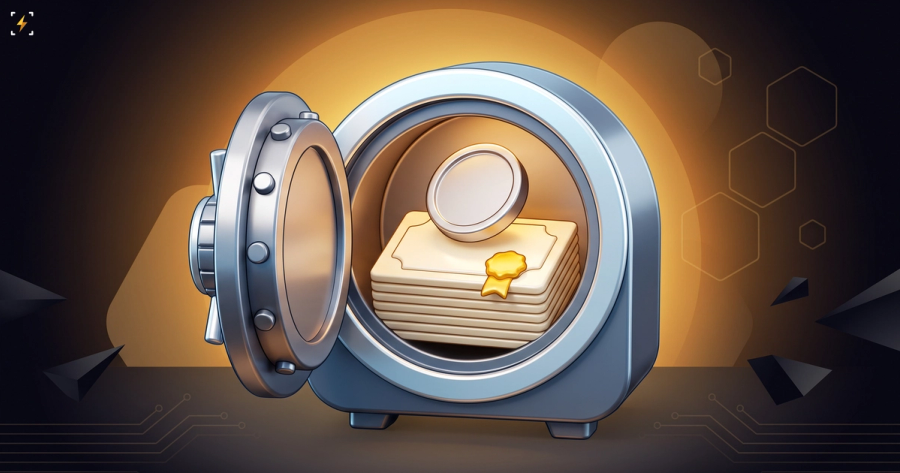
The reserves are dull, which is their best feature. Most of the money sits in the Circle Reserve Fund, a money market fund registered with the SEC, managed by BlackRock and custodied at BNY Mellon. It holds short-dated US Treasury bills and repo against them. Circle's annual report puts roughly 88% of all reserves in that fund as of 31 December 2025. The remainder sits as cash in accounts titled for the benefit of USDC holders, at banks on the systemically important list, and Deloitte signs the monthly reserve reports.
Honesty is due here. Those reports are agreed-upon-procedures attestations rather than full audits. They confirm the amount, the composition and the issuance on a stated date, and they confirm nothing about the days in between. The difference is worth knowing, and knowing it beats taking the issuer's word.
March 2023, the only real stress test
Silicon Valley Bank failed on 10 March 2023. The next day Circle disclosed that $3.3bn of its reserves were sitting inside it, about 8% of roughly $40bn in backing.
The market moved further than the arithmetic. USDC dropped to 87 cents, losing 13% on an 8% hole, because people were selling what they did not know rather than what they had counted. The weekend did the rest.
It ended on 13 March. US authorities guaranteed SVB depositors, the money came free and the price returned to a dollar. Everyone who sold at 87 cents handed the difference to everyone who had read the reserve reports.
The lesson sits one layer down. A stablecoin has exactly one point of failure, and it is the bank holding the cash rather than the blockchain. Circle rebuilt its custody around that sentence afterwards.
Where the coin lives
USDC has no home chain. The contract is deployed across more than thirty blockchains, from Ethereum and Solana to Stellar, Tron, Sui and the XRP Ledger. Circle launched its own network, Arc, in 2026, where fees are paid in USDC and no separate gas token exists.
Moving between chains works differently from most tokens. A conventional bridge locks the coin on one network and issues a wrapper on another, and every lock becomes a target. Circle burns the coin on the origin chain and mints a new one on the destination. No money sits locked, so there is no prize for breaking in. For a user that means USDC on Solana and USDC on Ethereum are the same coin from the same issuer, rather than two wrappers carrying different risk.
Why Europe cares
MiCA has applied across the European Union since December 2024. It requires a stablecoin issuer to hold a licence, publish its reserves and let any holder redeem at par on demand. Exchanges operating in the EU must delist anything that fails those tests.
Circle went through the process first and took its licence in France. Tether did not: the company refused the requirement to hold a large share of backing in bank deposits, and USDT left European listings. By September 2026 the ECB itself proposed scrapping that rule, and we went through how European regulators arrived there.
“European users are afforded the protections of MiCA, ensuring safe and sound reserves, fully audited financial statements, prudential risk management and strict compliance with financial crimes and anti-money laundering rules.”
— Jeremy Allaire, Circle
Jeremy Allaire, co-founder and chief executive of Circle
The mechanics are plain. A permitted coin can be bought on a licensed exchange at the exchange rate. A delisted coin has to be found over the counter, and the counter charges for access. That is the whole of the 2.11 percentage point spread.
Two rulebooks, one answer
The United States signed the GENIUS Act on 18 July 2025, its first federal rulebook for stablecoins. The requirements read almost like the European ones: one-to-one backing, permitted assets from a short list only (cash, deposits at insured banks, short-dated Treasury bills, repo against them, government money market funds), monthly publication of reserve composition and a ban on rehypothecating the backing.
Two of the world's largest regulatory blocs reached the same formula independently. The argument over what should back a stablecoin is settled, and the answer is US government debt. Nothing else made the list.
European unease starts there. Stablecoin issuers already rank among the twenty largest holders of American government debt, and every new coin in circulation is fresh demand for Treasury paper. When someone in Spain pays someone in Poland in stablecoins, American obligations are backing that transaction and European ones are not. That is why the ECB is in a hurry with the digital euro, which we took apart in detail.
What it gives an ordinary person
Four reasons people use it:
- Time. Transfers leave and arrive at weekends, at night and on public holidays. The banking system cannot do that and will not learn soon.
- Cost that ignores size. Sending $50 and sending $50,000 cost the same, because you pay for a transaction rather than a percentage. Set that against remittances: we found that stablecoin settlement already carries between 0.4% and 0.85% of Philippine GDP, with an average peer-to-peer transfer of $618.
- Access to dollars. Where inflation runs high, a stablecoin stands in for a foreign currency account that the local bank either will not open or opens with strings.
- Verifiability. Reserve composition and issuance are published monthly and the issuer is listed on an exchange. Your own bank publishes nothing comparable about your money.
What it does not give deserves the same plainness. The holder earns no interest, because the yield on those Treasury bills belongs to the issuer. Transfers are final: send to the wrong address and the money is gone. And the issuer can freeze coins when authorities ask, which it does regularly.
That last point surprises people. A stablecoin is not cash. Someone owns the infrastructure, and that someone has to obey courts and regulators. For a law-abiding user the freeze function occasionally returns stolen funds. For anyone expecting crypto to be untouchable it is a deal-breaker, and the choice should be made with open eyes.
The short version
USDC is not a bet and not a way to earn. It is a dollar that runs on internet hours instead of banking hours. Its strength is that you can check it: a listed company, reserves in a BlackRock-managed fund, monthly reporting. Its weakness is the weakness of any receipt: you depend on whoever wrote it. Europe handled that by asking for proof instead of issuing a ban, and USDC produced the proof. The 211 euros on every ten thousand is what that proof is worth to your wallet.
Informational material, not investment advice. Market cap and turnover figures were taken on 1 October 2026 and move daily.

Comments (0)
No comments yet — be the first!
The market talks all day. We write when it says something
Short, and it tells you why it came
Related articles

The Digital Euro: Europe's exit from non-EU payment schemes and the trust test that comes with It
Why the ECB is building its own payment rail, how it plans to keep payments private, and why trust decides whether any of it works.

How Tax Authorities Detect Undeclared Cryptocurrency Income
Why self-custody, DeFi and crypto cards do not make a person invisible, and how to restore PnL and correct tax history before an audit.

AI stops where checking gets expensive
Five deployments from one week, all with published numbers. The line between the successes and the reversals is not capability. It is how fast and how cheaply anyone can establish that the machine was wrong.
Most readTop 7

Silicon Valley Workers Are Wearing Noise-Cancelling Masks to Dictate AI Prompts
332AI

