Democrats run against AI in the midterms, and the PAC has spent $52m
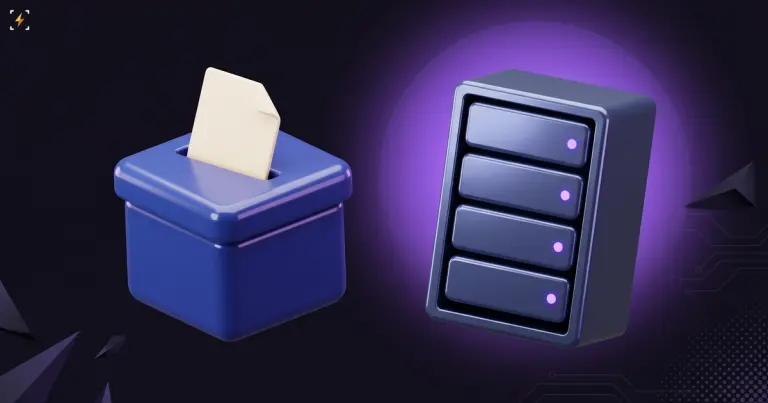
Democrats are heading into the midterms with AI as a campaign issue, and the vehicle is the data center. Polling from the Annenberg Public Policy Center puts opposition to a new data center nearby at 61% of Americans, split 69% among Democrats and 54% among Republicans. That second number is why the attack works: it does not need a single crossover voter to be persuaded first.
What the ads say
The ads say it plainly. In Ohio the former senator Sherrod Brown calls the Republican incumbent Jon Husted the face of data centers. Spots running in Texas ask why the electric bill is going up. Mentions of data centers in political advertising grew from a handful in January to around 164 by August, which tracks the shift from a local zoning fight to a national line of attack. The buildings themselves are dull to look at: rows of racks where a neural network is trained, pulling power the local grid was never sized to supply.
The party has not settled on what it is actually arguing. One camp wants a populist message about workers, tech billionaires and server halls. The other wants to stay friendly to the companies building them. Rob Flaherty, who ran part of the Harris campaign, says Democrats were afraid to talk about this for a long time, and the strategist Jesse Lehrich frames the opening as one the party has yet to take.
“I cannot think of a bigger political gift than Donald Trump just wholly bear-hugging the industry.”
— Jesse Lehrich, Democratic strategist
Who is paying for the other side
The industry's own money is easier to count, so we pulled the filings rather than the press releases. Leading the Future, the super PAC registered in Henderson, Nevada, reports $75.98m raised and $52.13m spent through 30 September, leaving $23.85m in hand. Its first filing period opens on 15 August 2025, so that is thirteen and a half months of work.
Four cheques do almost all of it. A16Z Capital Management gave $25m in August 2025 and another $25m in February 2026. Greg Brockman and Anna Brockman gave $12.5m each in September 2025. That is $75m of the $75.1m in contributions. The Marc Andreessen and Ben Horowitz lines that sit alongside them in the schedule are the partnership attributions of the firm's own cheques rather than separate donations, which is how a careless read turns $75m into $125m.
What it adds up to
Against that, the Democratic side has announced a $4m ad blitz through the Tomorrow Together PAC in battleground House races. Fifty-two million already spent against four million announced is thirteen to one, and the pro-AI committee still has nearly six times the Democratic buy sitting unspent.
Whether any of this becomes rules is a separate question from whether it wins seats. The industry's public case has been that markets sort this out faster than regulators, which is the argument Jensen Huang made and we tested against his own share price. The local case is colder: data centers also drove a record year for US clean energy, and the same substations carry both stories.
Informational material, not investment advice. Committee figures come from filings covering the period to 30 September 2026, and later money appears only in reports not yet due.

Author
MaksTrading man
I've been interested in the cryptocurrency market for a long time, am a trader, and write articles and news about my experience and crypto in simple terms.
Comments (0)
No comments yet — be the first!
Join our community
No spam, unsubscribe in one click
Related news


Most readTop 7

Silicon Valley Workers Are Wearing Noise-Cancelling Masks to Dictate AI Prompts
371AI

