Lady Gaga's fiancé built an AI biotech startup, Outer Bio
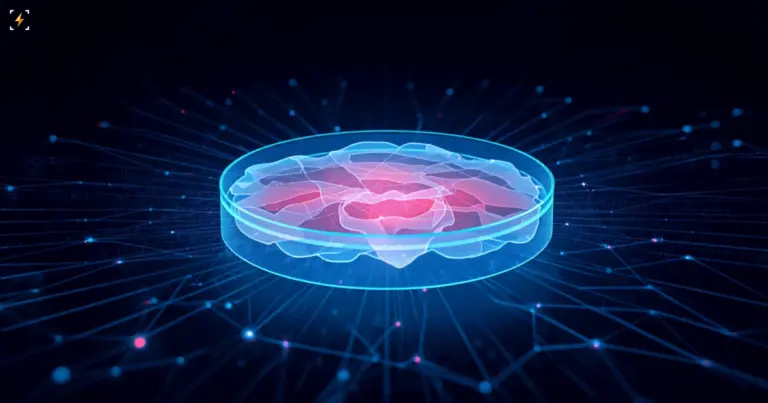
Lady Gaga's AI biotech venture Outer Bio stepped out of stealth this week. The startup keeps donated human skin alive for four weeks, then trains machine learning models on how that tissue reacts to treatment, BeInCrypto reported.
Michael Polansky, the singer's fiancé, co-founded the company and runs it as CEO. Gaga, born Stefani Germanotta, sits on the board. Backers have committed roughly $23 million so far.
The platform is named Yuna. Skin removed from the body normally dies within a week; Yuna stretches that window to four weeks, long enough for researchers to track slow biology like collagen breakdown, inflammation, and cellular aging. Tissue reaches the lab within hours of surgery, mostly leftover material from cosmetic procedures, and donors span every age group, both sexes, and all six Fitzpatrick skin tones.
The timing lines up with a regulatory shift. The FDA issued a roadmap in April 2025 to cut unnecessary animal testing and reported first-year progress this April, noting that more than 90% of drugs that clear animal studies still fail in human trials. Europe moved earlier: a full marketing ban has covered animal-tested cosmetics across the EU since March 2013, so brands selling there have needed human alternatives ever since.
“AI models are improving far faster than the experiments that validate and train them.”
— Michael Polansky, co-founder and CEO of Outer Bio
Polansky's pitch centers on what simplified lab models miss. A dish of cultured cells can flag toxicity, he argues, without showing whether a compound works, because it lacks the organ the drug is meant to reach. Living tissue closes that gap: it shows both the damage and the repair, over weeks instead of hours.
The platform has logged more than 10,000 treatments across 300 donors so far, with each sample yielding over 30,000 measurements. Published validation work shows Yuna reproducing inflammation, aging, and sun damage in ways that match known biology.
Polansky started the company quietly in 2022, after years running Sean Parker's family office. His argument is that biology, not compute, now caps how fast AI can improve in this field. Investors include Wing Venture Capital, Initialized Capital, SV Angel, Lightspeed Venture Partners, and Polansky's own firm, Hawktail.
Outer Bio's $23 million is modest next to the rest of the field. Chai Discovery raised $400 million in July for AI molecular design, and OpenEvidence raised $250 million in January. Scarce biological data is what keeps drawing that money: Pfizer and Anthropic already treat AI in healthcare as core infrastructure, crypto fortunes are bankrolling anti-aging studies of their own, and Midjourney's medical scanner is chasing a billion body scans a year. It fits a broader pattern our own coverage has tracked: Wintermute's argument that AI's next growth wave depends on scarce real-world resources more than on better models.
Ownership of that data matters as much as the models trained on it. Elon Musk feeds SpaceX engineering data into Grok, and Amazon enrolled Twitch creator archives into AI training by default. Proprietary biological data works the same way for Outer Bio: it is the asset competitors cannot easily copy.
- Company: Outer Bio, founded quietly in 2022 by Michael Polansky
- Backing: roughly $23 million from Wing Venture Capital, Initialized Capital, SV Angel, Lightspeed, and Hawktail
- Platform: Yuna keeps donated human skin viable for four weeks, versus about one week naturally
- Scale: 10,000+ treatments across 300 donors, more than 30,000 measurements per sample
- Context: dwarfed by Chai Discovery's $400 million and OpenEvidence's $250 million raises this year
Outer Bio now sells platform access to biopharma teams and consumer brands. The harder test comes later. Skincare has gained only one proven anti-aging mechanism in three decades, and richer data alone will not change that.
Nothing here should be taken as financial advice — just information to consider.

Comments (0)
No comments yet — be the first!
The market talks all day. We write when it says something
Short, and it tells you why it came
Related news


Most readTop 7

Silicon Valley Workers Are Wearing Noise-Cancelling Masks to Dictate AI Prompts
356AI

