Zcash Sapling pool: developers ask holders to move 400,000 ZEC
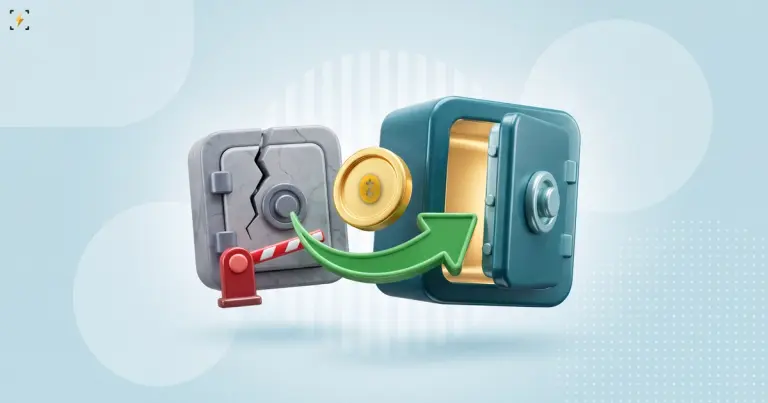
About 400,000 ZEC sit in Sapling, the older of Zcash's shielded pools. On Wednesday Zakura, the development team led by Sean Bowe and Dev Ojha, asked holders to move those coins out, because AI-assisted maths could one day break the cryptography Sapling relies on.
The coins make up less than 2% of the supply and are worth about $300 million, by Cointelegraph's count. Zakura proposes a network upgrade that blocks new payments into Sapling and keeps withdrawals open, so holders can move funds to Ironwood, the newer shielded pool.
The maths behind the risk
A shielded pool hides who sent how much to whom. To show the network that a hidden transfer is valid, Sapling attaches a zero-knowledge proof built on pairings, a branch of elliptic-curve maths.
Zakura wrote that the Riemann hypothesis, the most famous open problem in mathematics, has been proven, and that rumours credit AI labs with progress on factoring large integers. Factoring breaks RSA, which crypto networks rarely use. The best attacks on pairings come from the same family of methods, the Number Field Sieve.
If pairings fall, an attacker could forge Sapling proofs and create ZEC that never existed. Private keys and the records of who owns which coins do not depend on pairings, so Zakura says frozen Sapling funds could later come back through a new proof system.
What Zcash Sapling holders should check
- Transparent ZEC: safe under this scenario, no action needed
- Ironwood: uses a different proof system with no pairings
- Sapling: move the coins to Ironwood in a wallet that supports both pools
Miners send most of the payments left in Sapling. By Zakura's count, under 2.6% of Zcash transactions in the last 30 days touched the pool, and 66% of those were known mining payouts.
“The biggest lever to get folks off Sapling is imo to declare an end date by which Sapling becomes withdraw-only.”
— Dev Ojha (ValarDragon), Zcash community forum, 3 April 2026
Quote source: Zcash forum
Ojha opened that thread in April. Sapling held 600,000 ZEC then, down from 1.1 million at the start of 2024, so holders have moved another third of the pool since spring.
The cost of an attack
Zakura calls a practical pairing break highly speculative. Its estimate assumes the rumoured breakthrough makes attacks a billion times cheaper, and even then breaking the curve would cost $1 trillion to $300 trillion in computing.
Zakura wants Zcash and other networks to raise their security margins now. Pairings also secure consensus signatures on Ethereum, Solana and BNB Chain, which would need their own migration. For context, we wrote about Drake's timeline for moving Ethereum to post-quantum cryptography.
Zcash developers have moved fast before. On 3 June its developers paused transactions in the Orchard shielded pool after finding a vulnerability and restored them the same day with an emergency upgrade. The Zcash Foundation found no evidence that anyone exploited it.
By Zakura's own numbers, Zcash has time. Token holders will set the deadline in a vote, which Ojha called a requirement for any change of this scale. If you keep ZEC in an old wallet, check which pool it uses before that vote.
We are reporting a developer proposal. Nothing in this piece is advice to buy, sell or hold ZEC.

Author
MaksTrading man
I've been interested in the cryptocurrency market for a long time, am a trader, and write articles and news about my experience and crypto in simple terms.
Comments (0)
No comments yet — be the first!
Join our community
No spam, unsubscribe in one click
Related news



Most readTop 7

Silicon Valley Workers Are Wearing Noise-Cancelling Masks to Dictate AI Prompts
406AI

