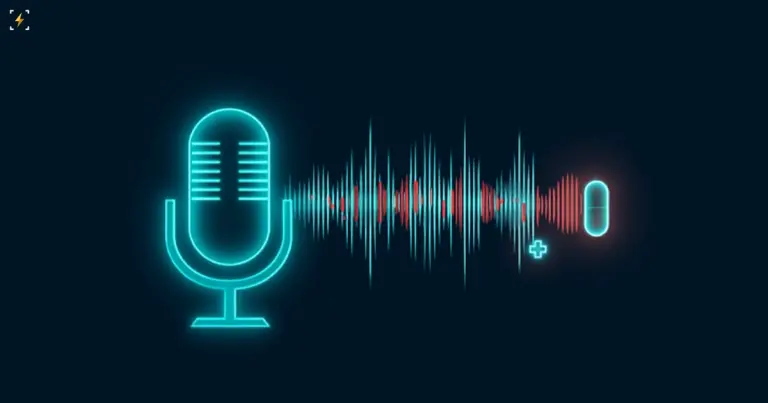
NHS watchdog: AI scribes are getting drugs and diagnoses wrong
AI technology that listens to and transcribes patient consultations can put patients at risk by getting the names of drugs and illnesses wrong, an NHS watchdog has warned, the Guardian reported. Healthwatch England, the statutory NHS patient champion, is flagging the errors as the technology rolls out rapidly across GP surgeries and hospitals.
This was eventually corrected but was a very traumatising experience to be given an incorrect diagnosis because of AI and then be told it's a typo.
One case shows what's at stake. An AI scribe's summary of a woman's consultation wrongly said she had demyelination, serious nerve damage that can lead to multiple sclerosis. The patient, herself an NHS health professional, queried the tool's record of her MRI scan result, and the hospital corrected it to what it should have said: no demyelination present.
Two more cases follow the same pattern: the patient catching what the doctor didn't. An AI scribe confused a GP-prescribed drug with a different one carrying a similar name. In another instance, an AI-generated summary letter left out that a hospital consultant had told a patient to get a repeat migraine prescription from their GP, an omission that could have left the patient without medication.
- GPs and hospital doctors in England already use 27 different AI scribes
- MHRA declined to classify AI scribes as medical devices, so no England-wide safety oversight applies
- Case 1: wrong demyelination diagnosis, caught by the patient querying her MRI result
- Case 2: AI scribe confused a prescribed drug with a similarly named one
- Case 3: summary letter omitted a migraine prescription instruction
- Survey: over half of 1,003 UK GPs rated their ambient AI records more accurate than their own notes
Healthwatch said it has heard "multiple stories from patients who have noticed these errors when a health professional hasn't," warning that "these inaccuracies may persist in their records if the patient doesn't catch them." A Healthwatch spokesperson added: "Healthcare has never been error-free. But our findings show the urgent need for clarity over how patients can report and get corrected any mistakes made by AI scribing tools or the professionals that use them." Rachel Power, chief executive of the Patients Association, put it more directly: "Trust and confidence in this technology depend on good communication and genuine partnership with patients and right now both are missing."
The push behind the rollout comes from the top. The government's 10-year health plan for the NHS in England expects AI scribes to "liberate staff from their current burden of bureaucracy and administration, freeing up time to care and to focus on the patient," a central piece of the planned shift from an analogue to a digital NHS. Healthwatch called it "worrying" that the Medicines and Healthcare products Regulatory Agency has decided not to classify AI scribes as medical devices, leaving no England-wide oversight to confirm they're safe or effective, a gap that sits alongside broader questions about how AI systems fail in consequential settings.
Dr Shier Ziser Dawood, a London GP, warned last year that AI scribes may prove "a double-edged sword" for family doctors. She recalled one scribe stating she'd told a patient to "continue their Prozac" despite never prescribing or discussing that drug with them, an example of what's known as an AI hallucination. She argued that doctors still having to check every transcript means the tools aren't yet saving time, and that if scribes are expected to end note-taking, GPs may be pushed to see two more patients a day, on top of consultation times already among the shortest in the world.
Dr Charlotte Blease, who studies AI in healthcare at Uppsala University in Sweden, takes a more measured view: "AI can and does make mistakes." Her research found GPs believe errors are more likely with multiple people in the room, patients with complex medical histories, or patients whose first language isn't English. But she also said: "The fact is, doctors can and do make mistakes without AI. And it is certainly possible the error rate is worse." Whether that reassures anyone depends on whether the comparison is the point, or whether it's AI catching what doctors miss that matters more.
Nothing here should be taken as financial advice — just information to consider.

Comments (0)
No comments yet — be the first!
Join our community
No spam, unsubscribe in one click
Related news

Figma sets rules for AI agents: 17x more code, 1.3x more releases
Bitcoin price over 72 hours: down 4.06% with open interest falling 6.1%
Anthropic compute ratio: $1.70 of revenue per dollar spent, up from 63 cents
Most readTop 7

Silicon Valley Workers Are Wearing Noise-Cancelling Masks to Dictate AI Prompts
367AI

