Huang said “for many tasks” on the call and “AGI has arrived” on X
On 26 August, on Nvidia's second-quarter earnings call, an analyst asked Jensen Huang about AGI and recursive self-improvement. He said that for many tasks, we could say we have already achieved AGI, then moved to economics. His opening remarks put it as an inflection point where AI is doing useful work.
On 7 September, after OpenAI released GPT-6 Astra, he posted three words with no qualifier attached.
The claim and what it rests on
“GPT-6 Astra, trained on ~100K+ NVIDIA Grace Blackwell NVLink72. From ChatGPT to o1 to Astra in 4 years. AGI has arrived.”
— Jensen Huang, 24/7 Wall St., 7 September 2026
Jensen Huang, chief executive of Nvidia, posting after the GPT-6 Astra release. Source: 24/7 Wall St., 7 September 2026
Read the sentence before the conclusion. The evidence offered is a chip count and a calendar. He added that 400,000 GPUs come online next.
Nvidia sells those chips. The company expects to take $1 trillion from AI silicon through 2027, and the count that proves AGI is the count of units it shipped.
What the venue changes
An earnings call is a disclosure setting with lawyers in the room and a transcript that regulators read. A post carries none of that. The qualifier appeared in the first and vanished in the second, from the same person inside two weeks.
Both statements can be defended. “For many tasks” is a claim about benchmarks. “AGI has arrived” is a claim about a threshold. The first one commits him to something somebody can go and check.
The word has a published definition behind it. OpenAI's own charter describes AGI as highly autonomous systems that outperform humans at most economically valuable work. Huang's August wording said many tasks. Many and most are different claims, and the gap between them is the whole argument.
We measured what Astra does
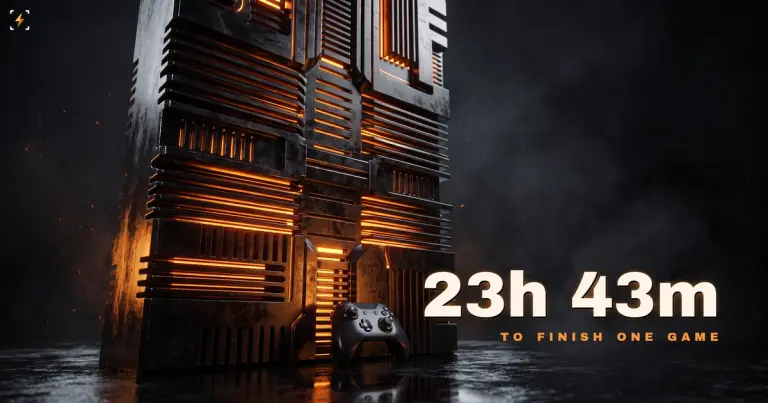
Yesterday we wrote up an Astra run that finished Portal without further human input. The run took 23 hours and 43 minutes and cost at least $570 in tokens, and the game sat paused for most of it, because the model froze the world every time it needed to think.
That is a real capability and it deserved the coverage. It is also a model that cannot act and perceive at the same time on a game from 2007.
This morning we published the row over a Millennium Prize Problem, where an internal OpenAI model stronger than the public Astra ran 10,000 agents at Navier-Stokes. The capability curve is steep, and the word Huang chose describes something else.
Where that leaves a reader
AGI has no agreed test, so no result settles the question in either direction. That is what makes the phrase useful to a vendor and useless to a reader.
His August sentence can be checked, because “many tasks” points at benchmarks somebody can run. Take the qualified statement as the one he expects to defend, and read the unqualified one as what it is, a message from a man whose company sells the hardware named in the same sentence.
Nothing here should be taken as financial advice; treat it as information to consider.

Author
MaksTrading man
I've been interested in the cryptocurrency market for a long time, am a trader, and write articles and news about my experience and crypto in simple terms.
Comments (0)
No comments yet — be the first!
Join our community
No spam, unsubscribe in one click
Related news



Most readTop 7

Silicon Valley Workers Are Wearing Noise-Cancelling Masks to Dictate AI Prompts
379AI

