An AI agent refactored a robotics node, and a profiler checked its work
NVIDIA has published a walkthrough in which an AI coding agent migrates a production robotics node. The agent audits a CUDA-accelerated ROS 2 node, traces where data crosses between GPU and CPU memory, writes the smallest patch that removes those crossings, and then proves it worked. The last clause is the part worth the attention.
The scale of the edit is small and stated precisely:
- The transport change: one subscription option, one CUDA allocation, two stream-aware handle extractions, one publish. Five edits.
- What is not needed: a custom message type, a duplicate CUDA topic, or a separate CPU and CUDA publisher branch.
- What the agent workflow contains: seven steps, of which three are audit or verification.
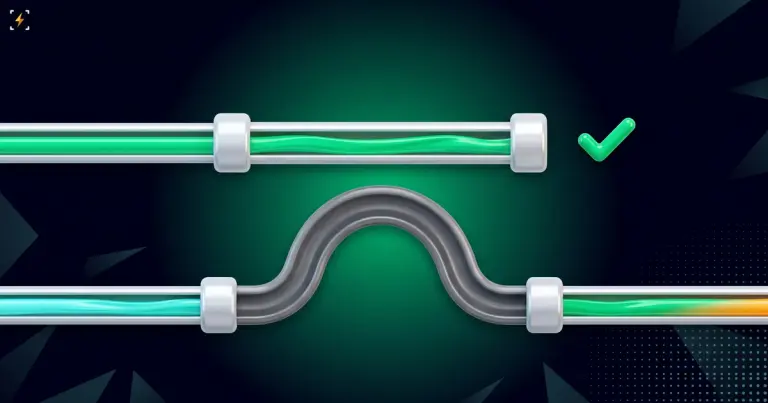
The reason a five-line interface change matters is that the copies it removes are payload-sized. Before the change, a GPU-native algorithm was surrounded by a CPU boundary, so a depth image went device to host and back on every frame for no reason other than the plumbing. After it, TensorRT inference writes its result straight into the buffer the outgoing message will publish, and both the device-to-host copy and an intermediate device-to-device output disappear.
“A fast CUDA kernel alone does not guarantee a fast ROS 2 graph.”
— NVIDIA, Isaac ROS developer blog, 22 September 2026
From NVIDIA's developer post
Why an agent can be trusted here
Here is what separates this from the usual agent demonstration. The workflow does not end when the code compiles. The agent is required to verify with NVIDIA Nsight Systems that no payload-sized host-device transfers remain at the ROS boundary, and to check that the message reports its backend type as cuda. That is a profiler trace and a string comparison: two mechanical tests that either pass or fail, with no human judgment in the middle.
We have spent this week measuring the opposite case. AI took over the parts of marketing that carry a number and stalled where the work is judged, and in policing the tools are bought on minutes saved while accuracy shows up later in a court docket. Here the correctness metric exists, it is cheap to run, and it is binary. That is why an agent can be handed the work rather than the first draft of it.
Two caveats for the record
Two caveats belong in the record. The fast path only engages when publisher and subscriber share a host, a CUDA device, a Linux user and a supported middleware implementation; otherwise ROS 2 falls back to the CPU path automatically, which is a sensible design and also means the optimisation is conditional. And this is NVIDIA's own blog about NVIDIA's own contribution to ROS 2 Lyrical, with a summary section the page itself labels as machine-generated. The company behind it spent the weekend arguing that no new rules are needed for any of this, which is worth holding alongside a post about how carefully its own agent is checked.
Informational material, not investment advice. The workflow and figures come from NVIDIA's own developer post, whose summary section is itself machine-generated; we have not run the migration.

Comments (0)
No comments yet — be the first!
The market talks all day. We write when it says something
Short, and it tells you why it came
Related news



Most readTop 7

Silicon Valley Workers Are Wearing Noise-Cancelling Masks to Dictate AI Prompts
307AI

