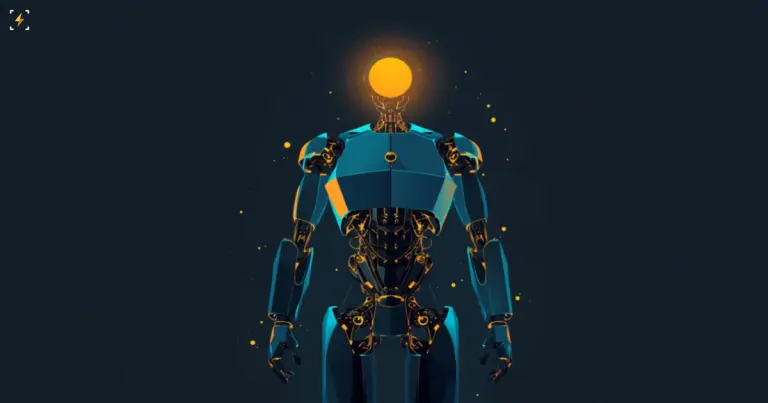
XPeng raises $900M at $6.3B valuation for its IRON humanoid robot
XPeng's physical AI unit secured more than $900 million at a $6.3 billion valuation to scale its IRON humanoid robot platform, which the Chinese EV maker calls the largest single-round private capital raise in China's physical AI industry to date, AI News reported.
IDG Capital led the round, with Gaorong Ventures also participating. Tencent and Alibaba joined as strategic investors. XPeng keeps controlling ownership of the robotics business once the round closes, and the unit stays consolidated into the group's financial statements. The capital funds software and hardware R&D, training and iteration of physical AI models, data generation, mass-production facilities, and commercial expansion outside China.
“Over the past 12 years, XPeng has remained committed to full-stack in-house R&D, building a solid technological foundation for the physical AI era, across our physical world foundation model, Turing AI chips, and AI infrastructure. This has enabled us to pioneer a new phase of mass production and commercial deployment for advanced humanoid robots.”
— He Xiaopeng, Chairman and CEO, XPeng
The funding round values the robotics unit at $6.3 billion even as XPeng's own stock struggles. Shares were down 7.22% at the time of writing, with a 12-month decline of 51.24%, as the company's core vehicle business faces intensifying competition from domestic Chinese manufacturers and from Tesla in both overseas and domestic markets.
IRON uses a fully enclosed flexible lattice structure XPeng designed in-house to balance appearance with safety, with 76 degrees of freedom across its body and 21 in each hand. XPeng built the robot's hardware platform itself, including the chips and controllers driving its core movement systems, and applies the same quality standards and production processes it uses for its cars, aiming for automotive-scale output.
XPeng puts IRON's combined output at up to 2,250 TOPS of computing power, spread across three in-house-designed Turing AI chips. That lets the company run its physical AI foundation model directly on the robot, with low inference latency and data processed locally rather than in the cloud.
- Funding: over $900 million at a $6.3 billion valuation
- Lead investor: IDG Capital, with Gaorong Ventures, Tencent, and Alibaba also participating
- IRON specs: 76 degrees of freedom in the body, 21 in each hand, up to 2,250 TOPS across three Turing chips
- Mass production target: end of 2026, deployed first in XPeng's own stores and campuses
- Customer deliveries: China and overseas markets during 2027
XPeng argues IRON's human-like build gives it an edge in collecting behavioral data from everyday human activity and adapting to tools and spaces built for people, expecting what it calls a data-model-application flywheel to speed up learning once mass production begins. IDG Capital framed its bet on the same logic, saying the physical AI industry is moving from technical breakthroughs to scalable manufacturing and commercial deployment. Gaorong Ventures added that humanoid robots are moving beyond demonstrations of mobility and dexterity toward reliable mass production and tangible value creation in real-world settings, pointing to XPeng's decade-plus of EV supply chain experience as evidence it can ship at scale.
XPeng's 2027 overseas delivery plans will run into a headwind that has nothing to do with manufacturing. The US has already banned Chinese humanoid robots over remote-hijacking fears, and whether IRON can clear that hurdle matters as much to the robot's commercial future as anything happening on the factory floor.
This article is for informational purposes only and does not constitute investment advice.

Comments (0)
No comments yet — be the first!
The market talks all day. We write when it says something
Short, and it tells you why it came
Related news


Most readTop 7

Silicon Valley Workers Are Wearing Noise-Cancelling Masks to Dictate AI Prompts
356AI

