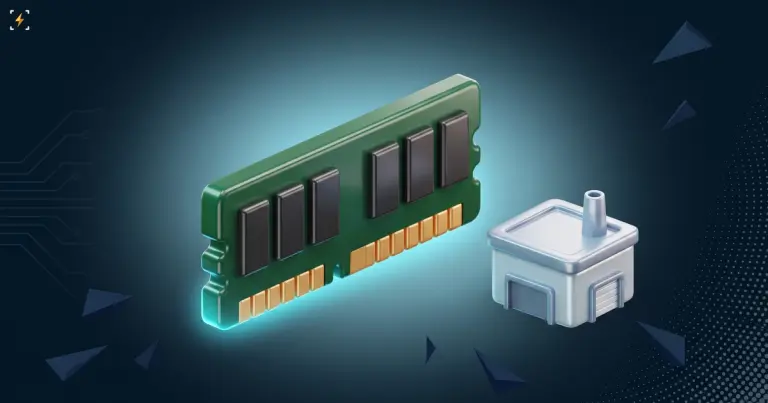
SK hynix may rent space from the firm that sold it memory in 2020
SK hynix is in talks with Intel about making memory chips in the United States for the first time, Reuters reported on Wednesday citing anonymous sources, relayed by TechCrunch. One option would have the Korean company lease space at Intel's planned Ohio factory. Another is a joint venture that could include cloud providers.
“SK hynix is exploring various options to strengthen its global competitiveness, but no specific plans or arrangements have been finalized at this time.”
— SK hynix, Statement to TechCrunch, 16 September 2026
SK hynix in a statement to TechCrunch, 16 September 2026
SK hynix and the deal that aged
Read the sentence again and the shape of the last six years falls out of it. In October 2020 Intel sold its NAND flash-memory business to SK hynix for $9 billion, because memory had become a commodity Intel did not want. The buyer may now be renting factory space from the seller.
Three numbers measure how that trade aged:
- SK hynix shares are up 1,965% since that deal. Intel's are up 92%.
- SK hynix is worth about $938 billion today, against Intel's $539 billion.
- The $9 billion Intel received for the business is now 1.0% of SK hynix's market value.
SK hynix reports trailing revenue of 189.17 trillion won, about $138 billion at today's 1,366.6 to the dollar and up 145% on the year, exchange filings show. Intel's trailing revenue is $57.03 billion, up 7.5%. The company that sold memory as a low-margin distraction now trails the buyer by a factor of 2.4 on revenue alone.
High-bandwidth memory is the reason. Every AI accelerator needs stacks of it because a neural network is limited by how fast weights reach the processor, demand has outrun supply, and SK hynix has been the main beneficiary. The company is already building a $3.8 billion advanced packaging and research plant in West Lafayette, Indiana, with mass production due in 2029. That site takes DRAM wafers made in South Korea and packages them into HBM, so it adds American capacity at the back end without moving the hard part.
What Ohio would actually change
Ohio would move the hard part. Making the wafers in the United States, rather than packaging imported ones, is a different order of commitment, and it is what Washington has been pressing for. The White House said in January it could impose broader tariffs on semiconductor imports while offering relief to firms that invest domestically, which is the same lever applied to batteries earlier this month.
Seoul may have views of its own. Korean officials hold that the decision belongs to SK hynix, but any plan touching strategically important chip technology can trigger a government review under a law written to stop sensitive technology leaving the country. That is the clause worth watching, because it applies to wafer fabrication and not to packaging.
Nothing is signed. SK hynix said no specific plans have been finalised and that no decisions have been made on either scenario, and Intel had not commented when TechCrunch published. Chairman Chey Tae-won signalled in July that the group should build in the United States where feasible, and the company listed American depository receipts on Nasdaq the same month, which is the kind of groundwork that precedes a decision rather than follows one.
Why this is the AI story
For anyone tracking the AI build-out, this is the supply side of the same story as the capital expenditure. Memory is the bottleneck, the bottleneck is Korean, and the United States is trying to buy its way into the middle of it. Jensen Huang argued this week that the market should be left to sort AI out. This is what that market looks like when it does: the memory maker, not the chip designer, holds the scarce thing, and governments on both sides now want a say in where it gets made.
Informational material, not investment advice. Market figures were measured at 11:00 UTC on 16 September 2026, and the talks are unconfirmed.

Comments (0)
No comments yet — be the first!
The market talks all day. We write when it says something
Short, and it tells you why it came
Related news


Most readTop 7

Silicon Valley Workers Are Wearing Noise-Cancelling Masks to Dictate AI Prompts
296AI

